Hoarding cleanup for seniors in Ontario: what families should know
By Amara Whitfield · Updated 2026-06-28
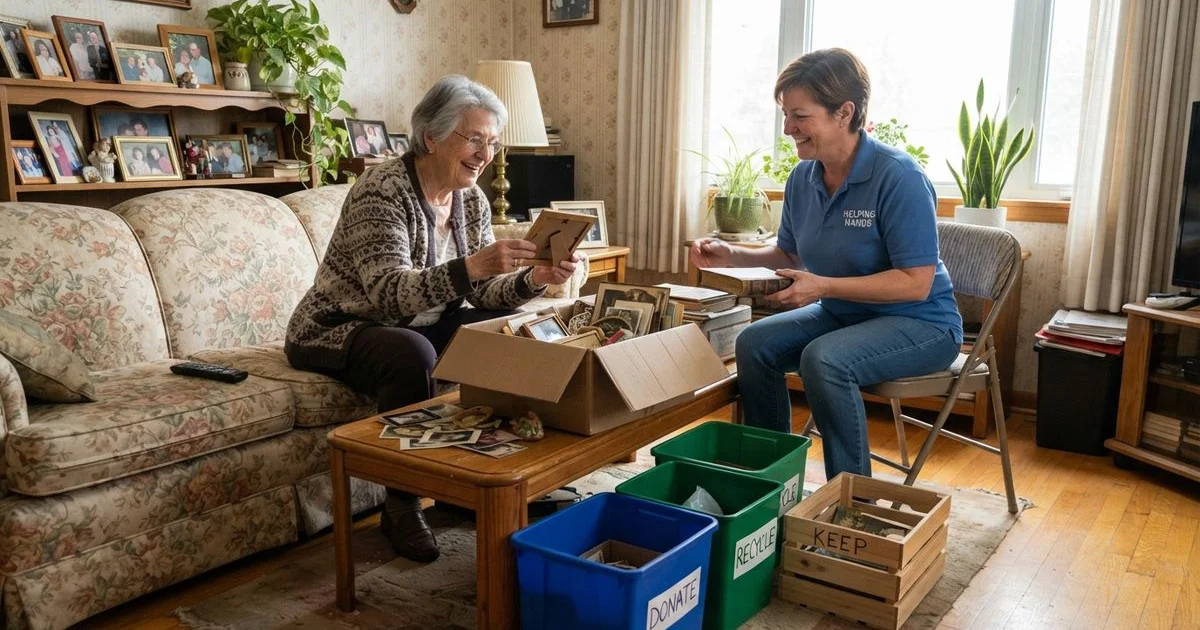
Hoarding cleanup for a senior homeowner rarely looks like a standard cleanout sped up or scaled down. Mobility, routine, and sometimes cognitive changes all shape what a safe, respectful process actually looks like, and families who understand this going in tend to have a smoother experience.
Why the approach is often different
A cluttered home that developed gradually over decades is not something a person typically wants cleared overnight, even if the accumulation has become a genuine safety issue. For many seniors, belongings are tied to memory and identity in ways that make rushed decisions feel like a loss, not a relief. Providers experienced with senior clients generally build in more time for decisions and check in more often than they would on a standard job.
Mobility is a practical factor too. A senior who has difficulty navigating stairs or reaching certain areas of the home may not have a full, current picture of what has accumulated in those spaces, which means the assessment stage matters even more than usual.
Health conditions can add another layer. Reduced mobility, vision changes, or chronic pain can all make it harder for a senior to manage clutter independently, even when they recognize it has become a problem. Understanding whether a health factor is contributing to the situation, rather than assuming it is purely about attachment to belongings, can change how family approaches the conversation and the timeline.
Safety versus preference
As with any hoarding situation, it helps to separate genuine safety concerns from things that are simply a matter of preference or habit.
| Concern | Example | How urgently it usually needs addressing |
|---|---|---|
| Mobility hazard | Clutter blocking a path to the bathroom or bedroom | High priority |
| Fall risk | Loose items or uneven piles in walkways | High priority |
| Routine clutter | Papers, mail or general accumulation in low-traffic areas | Can often wait, address at the senior’s pace |
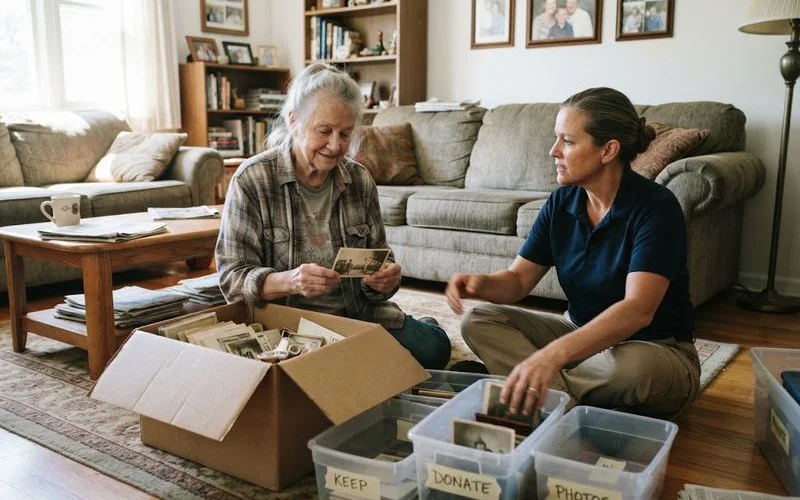
| Sentimental collections | Photos, keepsakes, items tied to memory | Handle with care, involve the senior directly |
What to look for in a provider
An estate and senior move-out cleanout provider with real experience working with older clients should be comfortable slowing down, explaining each step clearly, and giving a senior meaningful say in decisions rather than working around them. Ask directly how they typically pace a job for an older client, and whether they are willing to schedule multiple shorter visits instead of one long, exhausting day. If the cleanup is tied to settling an estate rather than helping someone continue living at home, the estate cleanout guide for executors covers the additional legal and family considerations involved.
Involving family without overriding the senior
Family members often want to help, and that support matters, but it works best when it supports the senior’s decisions rather than replacing them. Where possible, let the senior lead on what to keep, especially with sentimental items, and reserve firmer intervention for genuine safety hazards. This balance is not always easy to strike, and it is normal for family members to disagree about where that line sits.
If multiple adult children are involved, it helps to designate one person as the main point of contact with the provider, rather than several family members giving separate, sometimes conflicting instructions. This keeps communication clear and avoids putting the senior in the middle of family disagreements about the process.
If cognitive decline is part of the picture, involving a healthcare provider or social worker in the planning stage can help the family make decisions that are both safe and respectful of the senior’s remaining independence. This is general guidance, not medical advice, and a professional familiar with the senior’s specific situation is the right person to weigh in on capacity and decision-making.
Cost and support considerations
Senior-focused cleanouts sometimes qualify for community or municipal support programs, particularly where safety hazards are involved, so it is worth asking a provider or a local aging-in-place service whether any assistance applies to your situation before assuming the full cost falls on the family.
For a look at how senior-focused providers in this directory are rated, including patience and communication, see our methodology page, or browse the full directory to compare options.
FAQ
- Does age itself affect how a cleanup should be handled?
- Not directly, but mobility, cognitive changes and long-standing routines that come with age often mean a slower, more collaborative approach works better than a fast, standard cleanout.
- Is downsizing the same as a hoarding cleanup?
- They can overlap, but downsizing is generally a planned reduction of belongings ahead of a move, while hoarding cleanup addresses clutter that has built up in place, often without a move involved. Some providers handle both.
- How do I know if my parent's clutter is a normal part of aging or something more?
- Some accumulation is common as routines change with age. It becomes more concerning when it blocks daily function, such as reaching a bed or bathroom, or when it is paired with visible distress at the idea of removing items.
- Can a senior stay in the home during a cleanup?
- Often yes, especially for lighter jobs, and many seniors prefer to be present and involved in decisions. For larger or biohazard-related jobs, temporary relocation during the most intensive stages may be recommended.