Biohazard cleanup: what crews wear and why, and how to stay safe until they arrive
By Amara Whitfield · Updated 2026-06-23
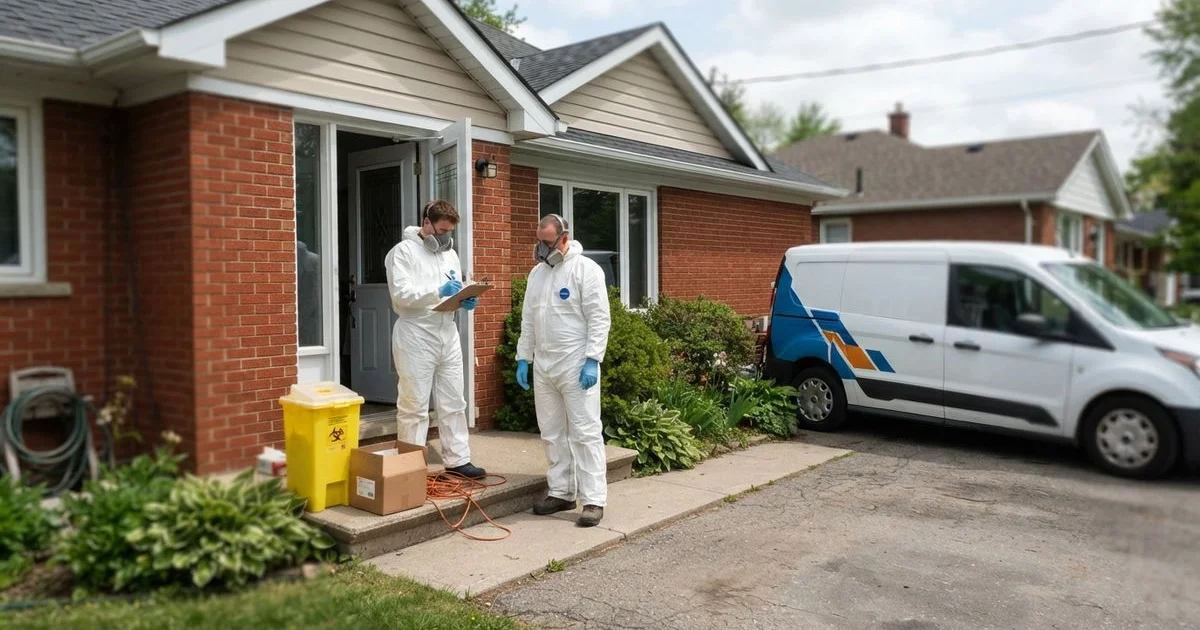
Biohazard cleanup looks different from a standard cleanout the moment a crew walks in wearing full protective gear. That is not for show. It reflects a genuine difference in what they are dealing with and how the human body reacts to exposure.
This is general safety information, not medical advice. If you have specific health concerns related to exposure, contact a healthcare provider.
What actually qualifies as a biohazard
In the context of hoarding and cleanup work, biohazard conditions generally include bodily fluids, human or animal waste, decomposition, significant mould, and heavy pest droppings. These are distinct from ordinary dirt or clutter because they can carry pathogens that pose a real health risk on contact or through airborne exposure. For a broader look at how clutter itself creates conditions like these over time, see health and safety risks of hoarding.
Why the gear matters
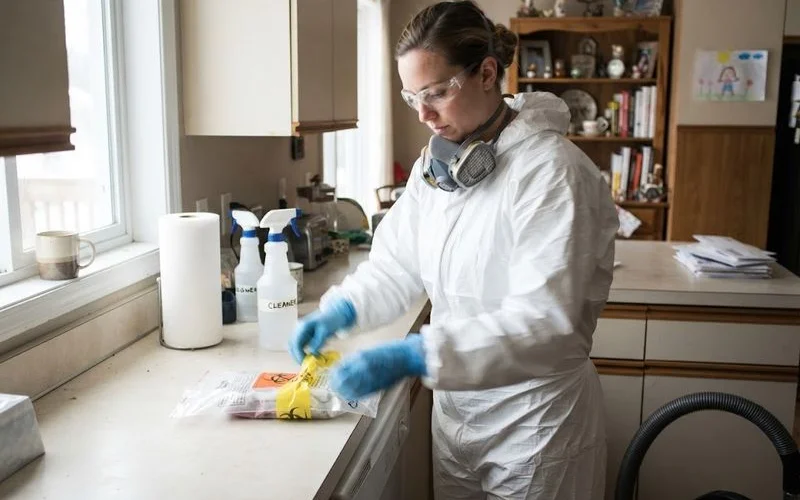
Full protective equipment, suits, respirators, gloves and eye protection, exists because biohazard exposure is not something you can judge safely by eye. A crew that shows up in full PPE for a significant contamination job is not being dramatic. They are following a standard that protects both themselves and, indirectly, you, since proper containment reduces the risk of contamination spreading elsewhere in the property during the cleanup.
The level of protection should scale with what is actually present. Light odour or dust does not need the same gear as a job involving waste or decomposition, and a provider who explains this distinction, rather than treating every job identically, is generally showing you they understand the work.
Containment is the other half of the equation that gear alone does not cover. Sealing off the work area, sometimes with plastic sheeting and negative air pressure equipment, keeps contamination from spreading into the rest of the property while the crew works, which matters just as much as what any individual worker is wearing.
| Contamination level | Typical protective response |
|---|---|
| Odour or dust only | Basic gloves and mask, standard ventilation |
| Mould or pest droppings | Respirator, gloves, sometimes containment |
| Bodily fluids or waste | Full suit, respirator, sealed containment, specialized disposal |
What to do while you wait for a crew
If you are dealing with a biohazard situation and a crew is on the way, the safest thing you can generally do is stay out of the affected area. Do not attempt to clean, move items, or ventilate the space yourself unless the risk is clearly minimal, since disturbing contaminated material can spread it or expose you directly.
If odour or air quality is a concern in the meantime, opening windows in unaffected parts of the home, without entering the contaminated area, is usually a reasonable step. Keep children and pets away from the affected space entirely until a professional confirms it is safe.
If you have already been exposed before realizing the severity of the situation, washing thoroughly and changing clothes is a reasonable precaution, and it is worth mentioning the exposure to a healthcare provider if you develop any symptoms afterward, even ones that seem minor at first.
Choosing a provider for this kind of job
A biohazard and trauma cleanup provider should be able to explain, before starting, what level of contamination they are dealing with, what protective measures they will use, and roughly how long containment and treatment will take. Reviewers across this directory consistently flag providers who explain their safety process clearly as more trustworthy than ones who rush straight into the job without a word about precautions.
It is also worth asking how a provider disposes of biohazard waste, since this material cannot go in regular trash. A provider who has a clear, specific answer to that question is demonstrating real experience with this type of work, not just general cleaning experience applied to a harder job.
Certification and training are worth confirming too. Biohazard remediation is a specialized field, and a provider who can speak specifically to the training their team has received tends to be a safer choice than one offering it as an add-on to general junk removal or cleaning services.
For more on how biohazard providers in this directory are rated on safety practices, visit our methodology page, or browse the full directory to compare specialists in your area.
FAQ
- What counts as a biohazard in a cleanup context?
- Bodily fluids, animal or human waste, decomposition, mould, and significant pest droppings are the most common biohazards crews encounter in hoarding and trauma cleanup situations.
- Why do crews wear full protective suits for some jobs?
- Full PPE protects against exposure to pathogens and contaminants that can be present in biohazard conditions. The level of protection scales with the contamination present, not every job needs the same gear.
- Is it safe for me to be in the home while biohazard cleanup happens?
- For anything beyond light odour or dust, it is generally safer to stay out of the affected area, and often the property entirely, until the crew confirms it is safe to return.
- Should I try to clean up a biohazard situation myself before a crew arrives?
- Generally no, unless the risk is minimal. Improper handling can spread contamination or expose you to health risks that trained crews are equipped to manage safely.